
"Foreign LLC" Doesn't Mean Foreign-Owned: The State Term Explained
The term “foreign LLC” can be confusing. Learn the difference between an LLC formed in another U.S. state and a U.S. LLC owned by someone outside the country.
- #Foreign LLC
- #Foreign-Owned LLC
- #LLC Registration
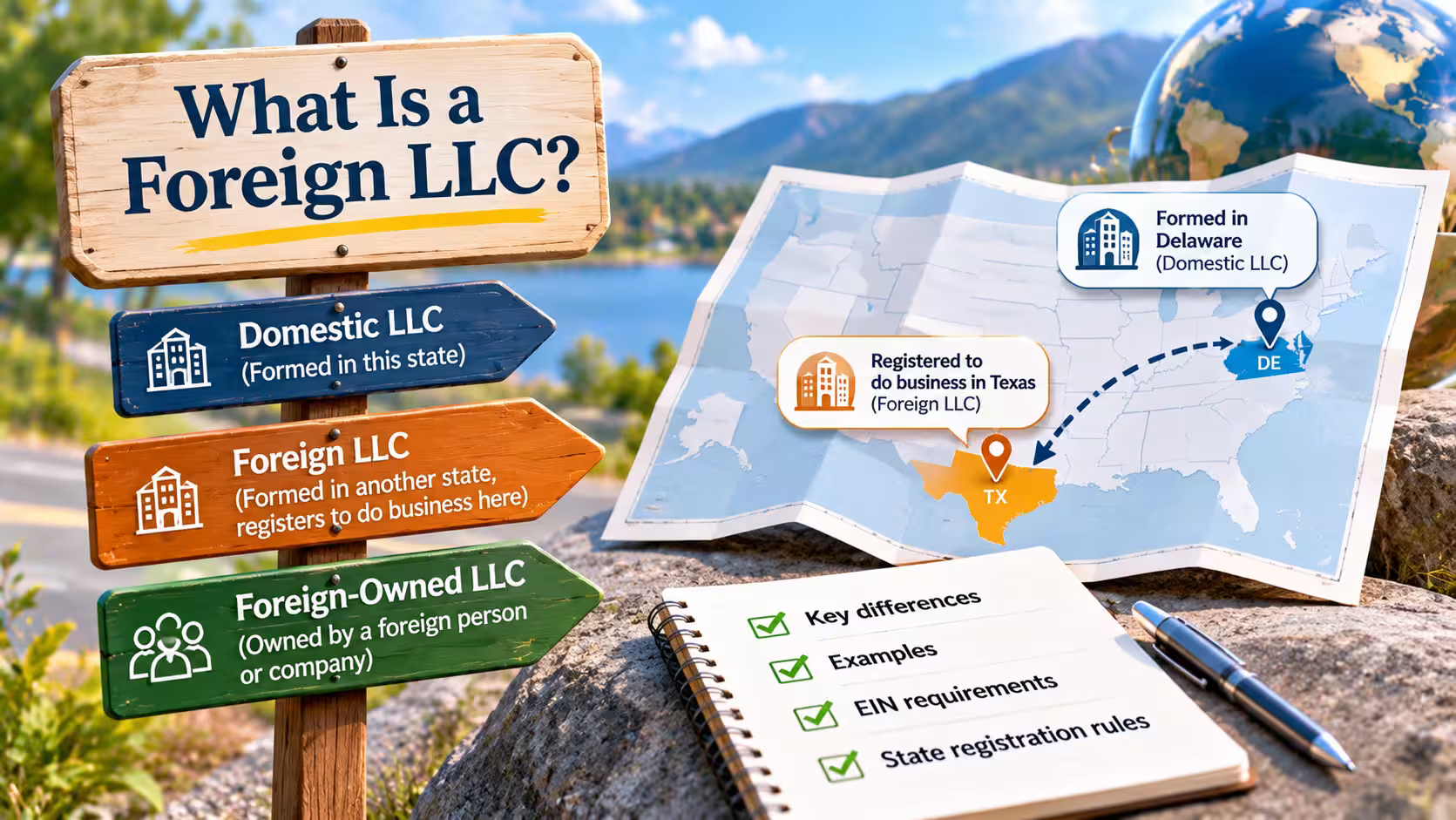
What is a foreign LLC? In most U.S. state registration rules, a foreign LLC is an LLC formed in one state that registers to do business in another state. The foreign LLC meaning is about where the company was formed, not whether its owners live outside the United States.
This is the key difference between a foreign LLC vs domestic LLC. A domestic LLC is formed under the laws of the state where it is considered domestic. A foreign LLC was formed under another state's laws. Neither term automatically describes the owner's nationality.
A foreign-owned LLC is different. It is a U.S. LLC owned partly or entirely by a foreign person or company. A U.S. LLC can be foreign-owned while remaining a domestic LLC in its formation state.
What Is a Foreign LLC?
A foreign LLC is a limited liability company formed under the laws of one U.S. state that registers to do business in another state. The word "foreign" means outside that state's borders, not outside the United States.
For example, a Delaware LLC is a domestic LLC in Delaware. If it registers to do business in Texas, Texas may treat it as a foreign LLC. The company remains the same legal entity. It has not created a second LLC.
Foreign LLC vs. Domestic LLC: What Is the Difference?
The difference between a foreign LLC vs domestic LLC is the state where the LLC was formed compared with the state where it is registering to do business. The owner's nationality does not decide whether the LLC is domestic or foreign under state registration rules.
- Domestic LLC: An LLC formed under the laws of the state where it is being considered.
- Foreign LLC: An LLC formed under another state's laws and seeking to do business in that state.
- Foreign-owned LLC: An LLC with one or more owners who are foreign persons. This describes ownership, not the state where the LLC was formed.
Do not assume that a foreign LLC has foreign owners. Also, do not assume that a foreign-owned LLC must register as a foreign LLC in its formation state.
Examples: When Is an LLC Foreign or Foreign-Owned?
Example 1: A Delaware LLC Operating in California
A company forms an LLC in Delaware. It later opens an office and hires employees in California.
The LLC is domestic in Delaware. It may need to register as a foreign LLC in California, depending on California's rules and the company's activities. Its owners' nationalities do not change this state classification.
Example 2: A Wyoming LLC Owned by an Indian Resident
A person living in India forms a single-member LLC in Wyoming. The LLC has no registration in another U.S. state.
The LLC is domestic in Wyoming. It is also foreign-owned because its owner is a foreign person for relevant U.S. tax rules. It is not automatically a foreign LLC in Wyoming.
Example 3: A Foreign-Owned LLC Expanding to Another State
A person outside the United States owns a New Mexico LLC. The company later opens an office in Texas and begins activities that require registration there.
The LLC may need to register as a foreign LLC in Texas. It is also foreign-owned. These are two separate classifications.
Does a Foreign-Owned U.S. LLC Need Foreign Qualification?
Not just because its owner lives outside the United States. Foreign qualification generally depends on the states where the LLC conducts business and the registration rules in those states.
For example, a Wyoming LLC does not become a foreign LLC in Wyoming because its owner lives in India, the UK, or another country. It may need to qualify in a different state if its activities meet that state's registration requirements.
States use different rules to decide what counts as doing business. Activities such as maintaining an office, hiring employees, or operating a physical location may matter. Some activities may be exempt. Online sales alone do not create the same registration result in every state.
Check the Secretary of State or business filing agency in the state where the LLC plans to operate. Do not rely on the word "foreign" alone.
Does a Foreign-Owned LLC Need a U.S. EIN?
Sometimes. A foreign-owned LLC may need an Employer Identification Number (EIN) for federal tax reporting, employment taxes, excise taxes, banking, or other valid business purposes. The ownership label alone does not answer every EIN question.
One important example is a U.S. single-member LLC that is wholly owned by a foreign person and treated as a disregarded entity for federal income tax purposes. It may have a Form 5472 filing requirement when it has reportable transactions with a related party. The LLC generally needs an EIN for that filing.
Form 5472 is not required simply because an owner is foreign. The filing rules and reportable transaction requirements must be reviewed. A foreign-owned LLC should check its tax classification, ownership, and transactions with a qualified tax professional.
Learn more about who can be the responsible party for an EIN.
Does a Foreign LLC Need a Separate EIN in Every State?
Usually, registering the same LLC as a foreign LLC in another state does not create a new legal entity or automatically require a new federal EIN. The LLC generally continues using its existing EIN.
However, state tax accounts, employer registration numbers, sales tax permits, and other state identifiers may be separate from the federal EIN. A state may ask for additional registrations even when the LLC keeps the same EIN.
What Is Foreign Qualification?
Foreign qualification is the process an LLC uses to register with a state other than its state of formation when that state's law requires registration. The process often involves filing an application for authority or a similar document.
Depending on the state, the application may ask for:
- The LLC's legal name and formation state.
- The date the LLC was formed.
- Its principal business address.
- A registered agent and registered office in the state.
- A certificate of good standing or existence from its home state.
- Other details required by that state's filing office.
Requirements, fees, deadlines, and annual reports vary by state. Registering in another state does not mean the LLC has formed a new company there.
Does a Foreign LLC Have Different Tax Rules?
The phrase "foreign LLC" does not decide how the IRS taxes the business. Federal tax treatment depends on the entity's classification, ownership, income, and activities.
For example, a domestic single-member LLC is generally treated as a disregarded entity by default for federal income tax purposes. A domestic LLC with two or more members is generally treated as a partnership by default, unless it elects corporate treatment.
A foreign-owned U.S. LLC can have additional reporting duties. A foreign-owned domestic disregarded entity may need to file Form 5472 with a pro forma Form 1120 when the applicable reporting rules are met. This is a federal tax issue, not a foreign qualification rule.
See the IRS instructions for Form SS-4 and the IRS instructions for Form 5472 for more information.
Common Mistakes About Foreign LLCs
- Thinking foreign means outside the U.S.: In state registration, foreign usually means formed in another state.
- Confusing ownership with formation: A non-U.S. owner does not change the state where the LLC was formed.
- Assuming every out-of-state activity requires registration: States have different rules and exemptions.
- Applying for a second EIN unnecessarily: Foreign qualification does not usually create a new federal tax entity.
- Ignoring foreign-owner tax reporting: A foreign-owned domestic LLC may have federal reporting duties even if it is not a foreign LLC under state law.
- Assuming an EIN replaces state registration: An EIN is a federal tax identifier. It does not give an LLC permission to operate in another state.
Checklist: Understand Your LLC's Status
- Identify the state where the LLC was legally formed.
- List every other state where the LLC operates.
- Check whether its activities require foreign qualification in each state.
- Identify whether any owners are foreign persons for U.S. tax purposes.
- Confirm the LLC's federal tax classification.
- Check whether the LLC needs an EIN or already has one.
- Review any Form 5472 or other federal reporting duties.
- Keep state registration and federal tax records separate.
Frequently Asked Questions
What is a foreign LLC in simple words?
A foreign LLC is usually an LLC formed in one U.S. state that registers to do business in another state. "Foreign" means out of state, not necessarily outside the country.
Is a foreign LLC the same as a foreign-owned LLC?
No. A foreign LLC is defined by where it was formed compared with the state where it operates. A foreign-owned LLC is defined by who owns it.
Can a U.S. LLC be owned by someone in another country?
Yes. A person or company outside the United States can own a U.S. LLC, subject to applicable laws and tax rules. The LLC remains formed under the laws of its U.S. formation state.
Is a Wyoming LLC owned by an Indian resident a foreign LLC?
Not in Wyoming just because the owner lives in India. It is a Wyoming domestic LLC with a foreign owner. It may be treated as a foreign LLC if it registers to do business in another U.S. state.
Does a foreign-owned LLC need an EIN?
It may. The need depends on its tax classification, filing duties, employees, and other business requirements. A wholly foreign-owned U.S. disregarded entity may need an EIN for Form 5472 reporting when applicable.
Does foreign qualification give an LLC a new EIN?
Usually not. Foreign qualification generally registers the existing LLC in another state. It does not create a new legal entity or automatically require a new federal EIN.
Can a foreign LLC operate in more than one state?
Yes. An LLC can operate in its formation state and register in other states when required. Each state has its own foreign qualification rules, fees, and ongoing filing requirements.
Does a foreign LLC have to pay U.S. taxes?
The label alone does not determine tax liability. U.S. tax duties depend on the entity's classification, income, activities, ownership, and applicable federal and state rules.
Conclusion
So, what is a foreign LLC? It is generally an LLC formed in one state that registers to do business in another state. The term does not automatically mean the LLC is owned by someone outside the United States.
Keep state registration and foreign ownership separate. The first depends on where the LLC was formed and where it operates. The second can affect federal tax reporting and other compliance duties. Understanding both helps you choose the right registrations, tax forms, and EIN steps.